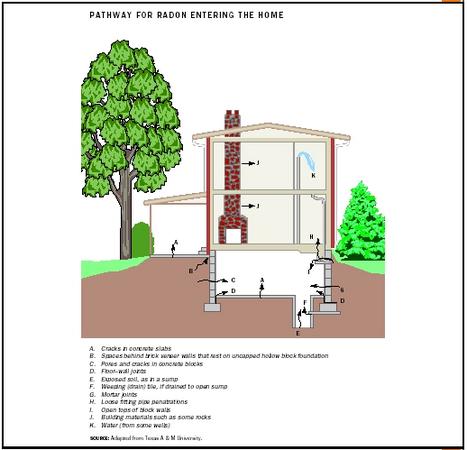
While most radon related deaths are due to radon gas accumulated in houses from seepage through cracks in the foundation 30 to 1 800 deaths per year are attributed to radon from household water.
Radon in well water effects.
It can also get into your home through well water.
Water from wells usually has higher concentrations of radon than does surface water such as lakes and streams.
However breathing radon increases the risk of lung cancer over the course of your lifetime.
Ground water moves through rock containing natural uranium that releases radon into the water.
Normally a higher radon dose is received from inhaling radon compared with ingestion.
Research indicates there is an increased risk of lung cancer associated with long term exposure to elevated radon levels.
Based on the potential for cancer the epa suggests that indoor air should not exceed 4 picocuries per liter pci l.
Some radon stays in the water.
Currently there is no federally enforced drinking water standard for radon.
High levels of dissolved radon are found in the groundwater in some areas flowing through granite or granitic sand and gravel formations.
The effects of radon if found in food or drinking water are unknown.
Radon dissolved in drinking water can be released into indoor air.
Only about 1 2 percent of radon in the air comes from drinking water.
The who guidelines for drinking water quality 2011 recommend that screening levels for radon in drinking water be set on the basis of the national reference level for radon in air.
What are the health effects associated with radon.
Radon is also found in ground water tapped by wells which supply about half the drinking water in the united states.
Rarely building materials have been found to release radon into buildings.
Drinking water containing radon also presents a risk of developing internal organ cancers primarily stomach cancer.
Following ingestion of radon dissolved in water the biological half life for removal of radon from the body ranges from 30 to 70 minutes.
Radon in well water can be released into the air in the home when water is used for showering and other household uses.
Radon in soil under homes is the biggest source of radon in indoor air and presents a greater risk of lung cancer than radon in drinking water.
Radon exposure can happen in any type of home whether it has a.