I have seen similar results in other homes including my own 1820 s farmhouse which had radon level of 17 pci l in the unfinished stone wall and dirt floor basement.
Radon basement or first floor.
Radon myths radon myths can be very dangerous.
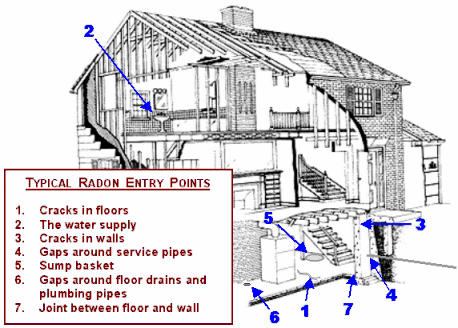
Radon enters buildings through cracks in the foundations and or basement walls unsealed joints and utility chases.
But for two story homes the median radon levels at first and second floors are 51 and 62 of the basement level respectively.
As a matter of fact homes built on a slab to not have the buffer of a basement or crawl space to absorb and dissipate radon gas before it enters the living area of a home.
Sealing radon out can be the simplest solution.
There is truly no single style of home that is not prone to radon gas and potentially highly dangerous levels.
This is because the neutral pressure plane is typically about halfway up the wall on the top floor.
Another example we had in deerfield was 14 0 in the basement.
According to the iowa residential radon lung cancer study 2000 the median first floor radon concentration in one story homes is on average 60 of the basement level.
And 7 0 in an upstairs bedroom on the second floor.
2 5 upstairs bedroom level 4 5.
However you will still need a radon mitigation system if there are elevated levels o radon in your home.
If your furnace or duct runs are located in your basement or crawlspace anytime the furnace fan runs for either heat or air conditioning the radon level on the first floor is often the same as it is in the basement or crawlspace.
The unfinished basement radon level was slightly above 4 pci l the first floor was lower at just above 2 pci l and one of the second floor bedrooms tested at above 8 pci l.
Radon is a whole house issue.
The highest concentration of radon tends to be found in the basement or on the first floor.
I m safe because i don t spend much time in my basement.
What have you been told.
4 8 in the office above the crawl space.
Radon eliminator can test your home for radon.
Sealing your basement floor is an excellent first step.
With a typical home and forced air heating radon levels on the upper floors will be very roughly about 40 less than in the basement.
This pattern has been repeated all over chicagoland in various homes.
This article should answer the question of whether or not you should seal your basement floor to protect against radon.
Radon can accumulate in some places where ventilation is inadequate such as in an underground mine.