Targets lung cancer with precise effective doses of radiation for successful outcomes in lung cancer treatment.
Proton beam therapy for small cell lung cancer.
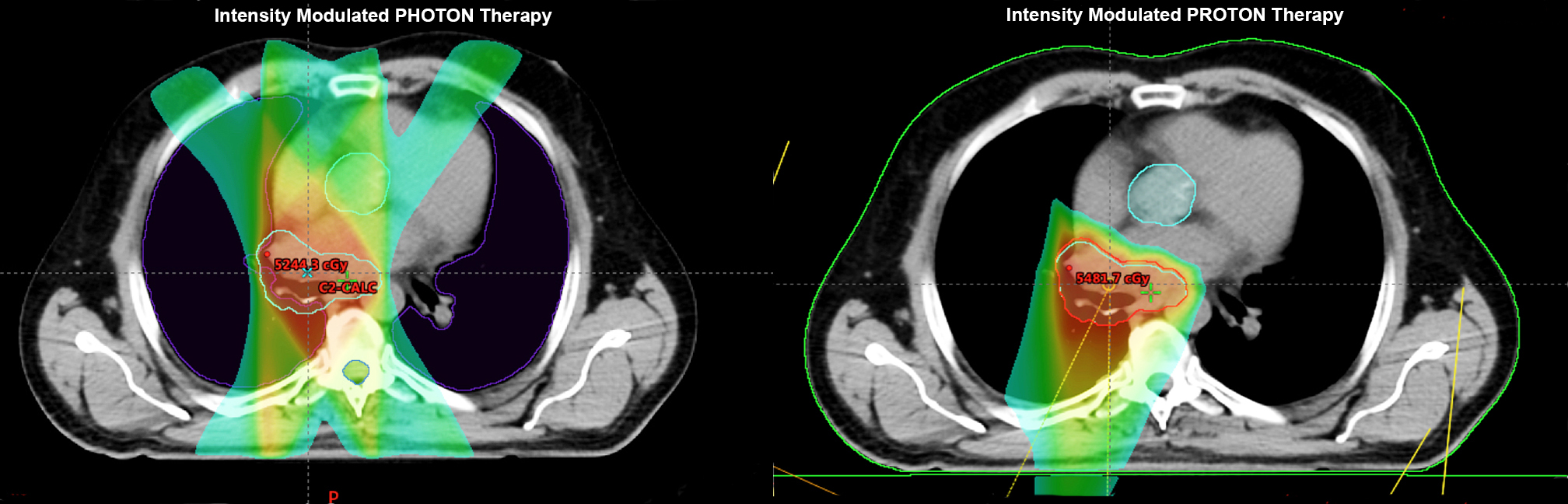
The ability of proton beam therapy pbt to reduce doses to these oars has been described for locally advanced non small cell lung cancer nsclc and dosimetric improvements have been demonstrated in comparison with intensity modulated radiotherapy imrt and 3 dimensional conformal rt.
Intrathoracic recurrence of non small cell lung cancer nsclc after initial treatment remains a dominant cause of death.
Radiation therapy uses high energy protons to kill tumor cells and shrink tumors.
We report our experience using proton beam therapy and intensity modulated radiation therapy for reirradiation in such cases focusing on patterns of failure criteria for patient selection and predictors of toxicity.
Giving carboplatin paclitaxel and proton beam radiation therapy may work better in treating patients with non small cell lung cancer.
We can attack tumors layer by layer and minimize harmful exposure to surrounding healthy tissue and organs.
The challenges of lung cancer treatment.
Results showed that proton treatment was safe and effective for treating early non small cell cancers in either the central parts of the lung or on.
The five year survival rate is just 15 percent among those diagnosed with the disease.
The trial was conducted in patients with inoperable non small cell lung cancer nsclc and showed that proton therapy was not superior in reducing serious lung toxicity compared with intensity.
Lung cancer usually begins in the cells lining the bronchi and often grows for a long time without producing symptoms.
Lung cancer is the leading cause of cancer mortality in the united states and remains a significant health problem worldwide.
Surgery and radiation are the primary curative modalities to treat lung cancer proton therapy is a form of radiation therapy that for some lung cancer patients allows for greater sparing of their organs from the effects of radiation exposure.
Proton beam therapy reirradiation non small cell lung cancer nsclc intensity modulated proton therapy impt introduction lung cancer today remains one of the leading causes of cancer related mortality worldwide with an estimated 222 500 new cases and 155 870 deaths expected in the united states in 2017 1.
Proton therapy for lung cancer treatment.
Physicians at the md anderson proton therapy center are world leaders in the research and treatment of lung cancer and pioneers in developing proton therapy for the benefit of lung cancer patients.
Bush conducted several clinical studies and followed patients for periods as long as twelve years.
3 5 the dosimetric benefits of pbt could lead to.