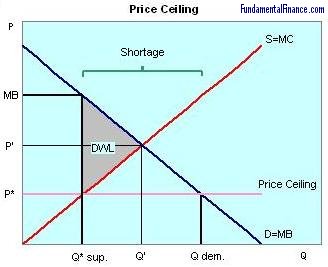
A price ceiling is a maximum amount mandated by law that a seller can charge for a product or service.
Price floor economics meaning.
Floors in wages.
Governments usually set up a price floor in order to ensure that the market price of a commodity does not fall below a level that would threaten the financial existence of producers of the commodity.
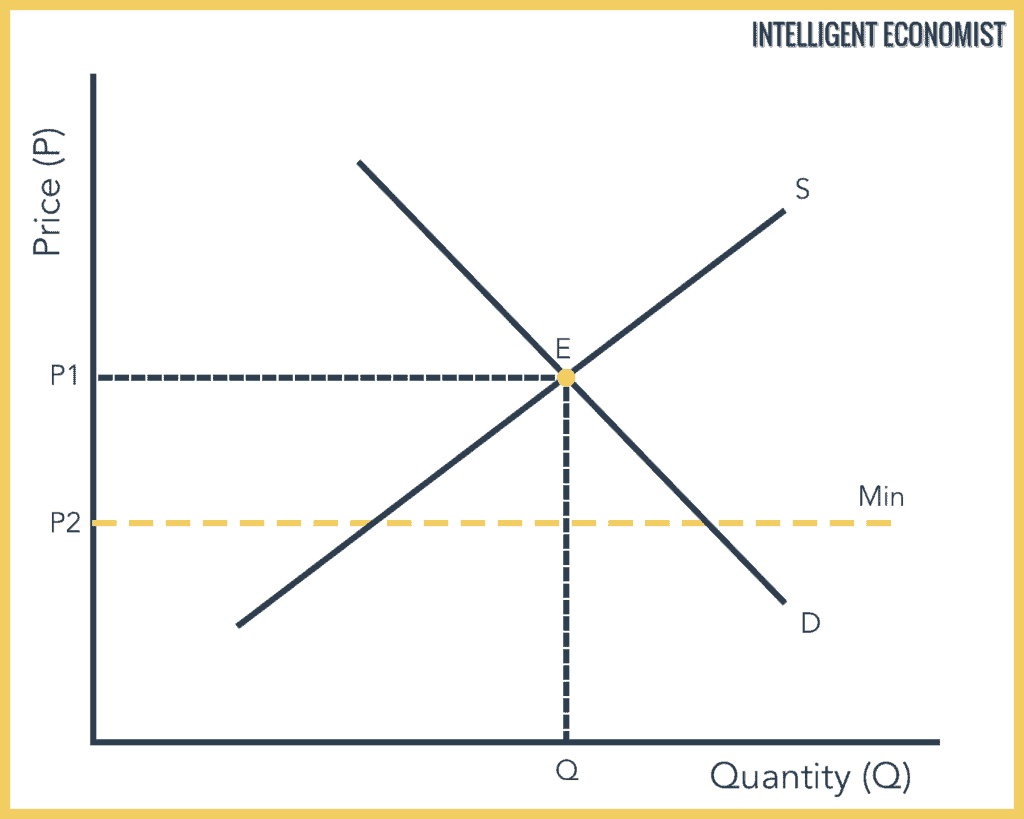
A price floor is an established lower boundary on the price of a commodity in the market.
Minimum wage is an example of a wage floor and functions as a minimum price per hour that a worker must be paid as determined by federal and state governments.
But this is a control or limit on how low a price can be charged for any commodity.
A price floor or a minimum price is a regulatory tool used by the government.
In this case since the new price is higher the producers benefit.
A price floor is the lowest legal price a commodity can be sold at.
The equilibrium price commonly called the market price is the price where economic forces such as supply and demand are balanced and in the absence of external.
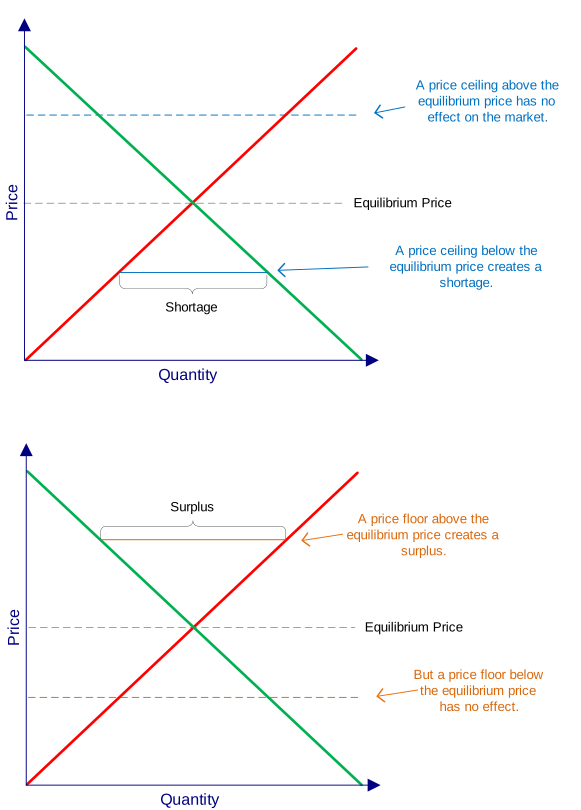
By observation it has been found that lower price floors are ineffective.
The trick is to remember that prices are free to operate above a price floor just like standing on a floor so any market price above the price floor will not be affected in any way.
Price floors are used by the government to prevent prices from being too low.
Price ceiling has been found to be of great importance in the house rent.
It has been found that higher price ceilings are ineffective.
Price floor has been found to be of great importance in the labour wage market.
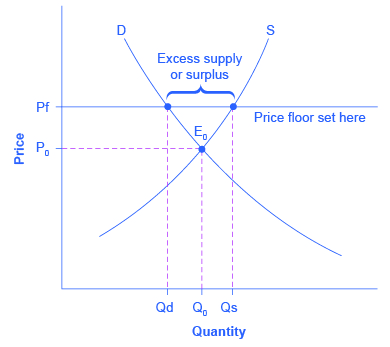
Price floor is a situation when the price charged is more than or less than the equilibrium price determined by market forces of demand and supply.
It s generally applied to consumer staples.
Price ceiling is a situation when the price charged is more than or less than the equilibrium price determined by market forces of demand and supply.
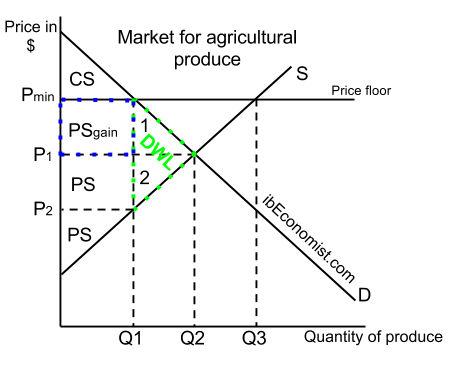
Price floors are also used often in agriculture to try to protect farmers.
A price floor must be higher than the equilibrium price in order to be effective.
The most common price floor is the minimum wage the minimum price that can be payed for labor.
It is legal minimum price set by the government on particular goods and services in order to prevent producers from being paid very less price.
Economics classes want students to be able to recognize the difference between binding and non binding price floors.