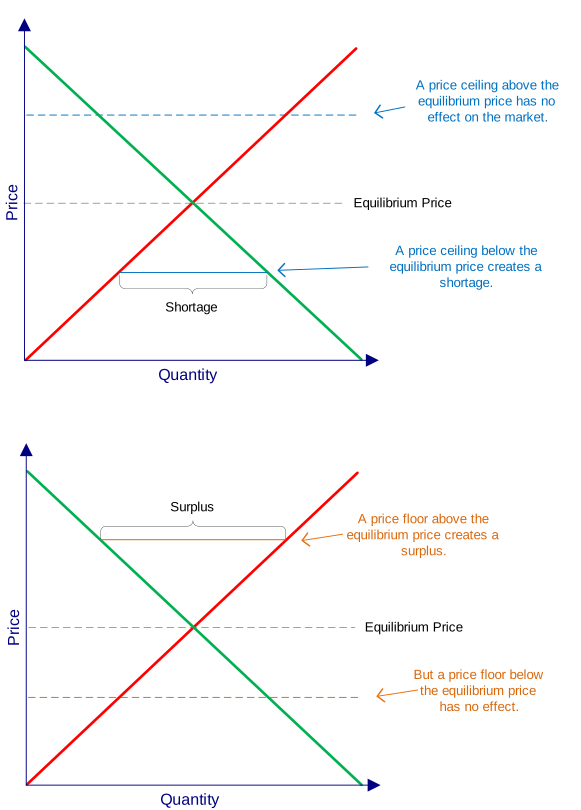
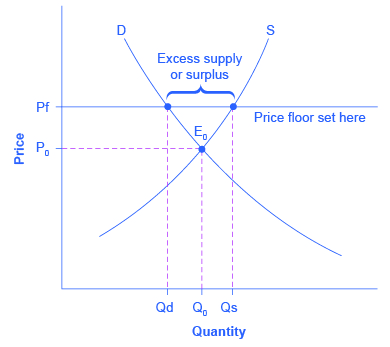
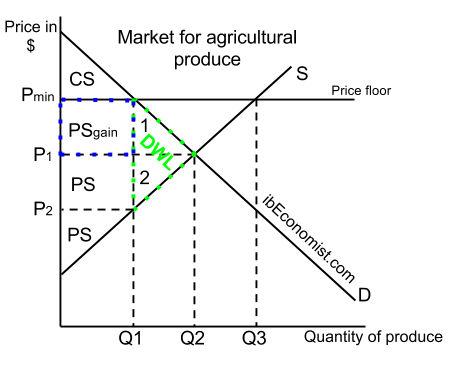
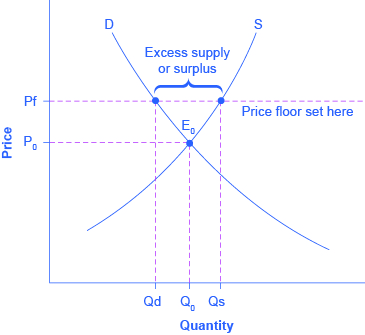
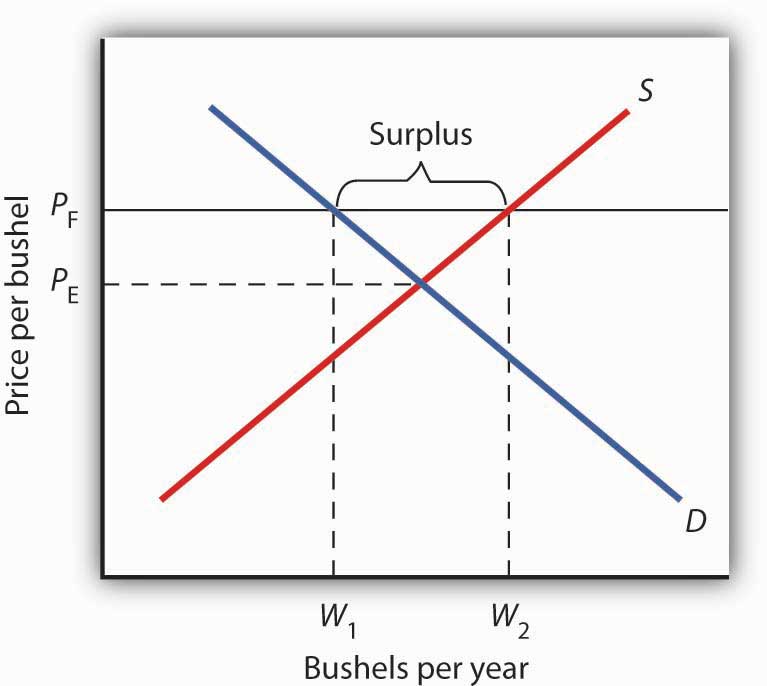
Simply draw a straight horizontal line at the price floor level.
Price floor definition economics example.
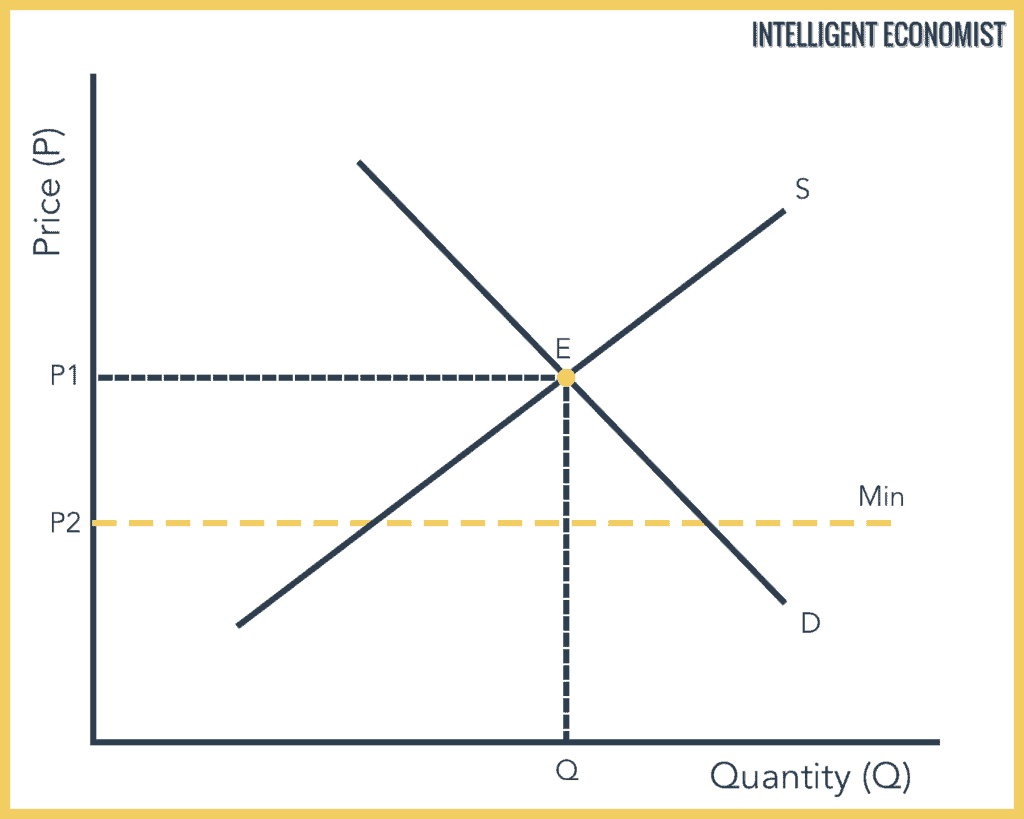
A price floor or a minimum price is a regulatory tool used by the government.
Price floor has been found to be of great importance in the labour wage market.
By observation it has been found that lower price floors are ineffective.
Similarly a typical supply curve is.
This control may be higher or lower than the equilibrium price that the market determines for demand and supply.
A price ceiling is a maximum amount mandated by law that a seller can charge for a product or service.
More specifically it is defined as an intervention to raise market prices if the government feels the price is too low.
Governments usually set up a price floor in order to ensure that the market price of a commodity does not fall below a level that would threaten the financial existence of producers of the commodity.
Price floor is a situation when the price charged is more than or less than the equilibrium price determined by market forces of demand and supply.
This graph shows a price floor at 3 00.
In this case since the new price is higher the producers benefit.
A price floor is a minimum price enforced in a market by a government or self imposed by a group.
It will provide key definitions and examples to assist with illustrating the concept.
Demand curve is generally downward sloping which means that the quantity demanded increase when the price decreases and vice versa.
A few crazy things start to happen when a price floor is set.
Drawing a price floor is simple.
A price floor is an established lower boundary on the price of a commodity in the market.
This lesson will discuss the economic concept of the price floor and its place in current economic decisions.
You ll notice that the price floor is above the equilibrium price which is 2 00 in this example.